Sunday, 30 December 2012

Virtually Anyone Can See The Dead Sea Scrolls Now

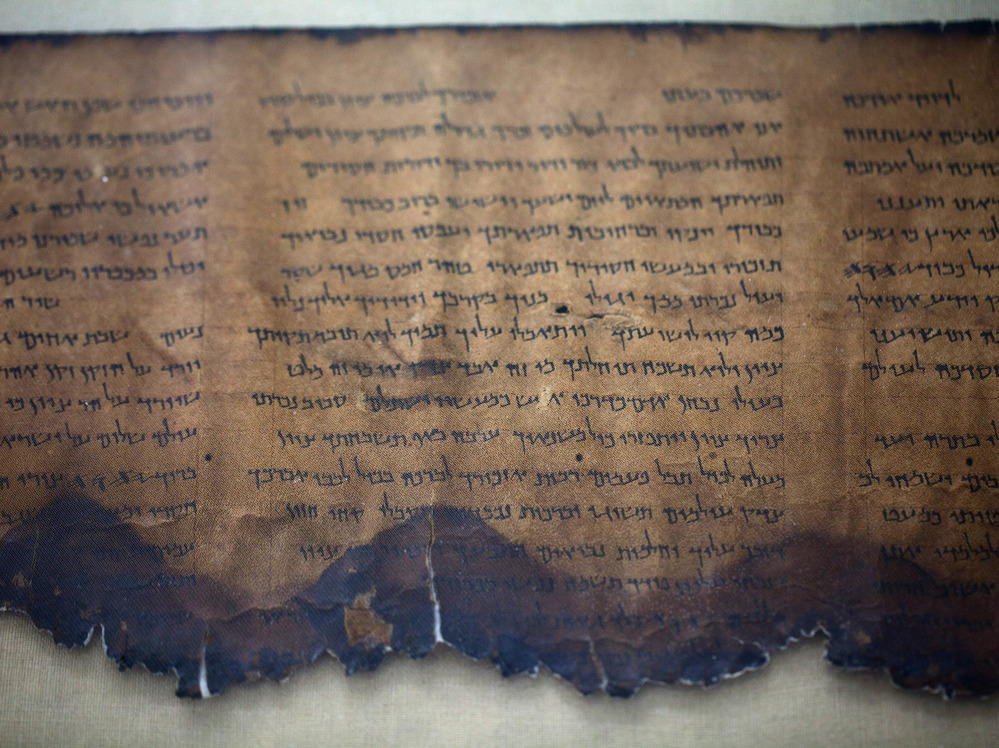
A fragment of the 2,000-year-old Dead Sea Scrolls is laid out at a laboratory in Jerusalem. More than 60 years after their discovery, 5,000 images of the ancient scrolls are now online.

Uriel Sinai/Getty Images A fragment of the 2,000-year-old Dead Sea Scrolls is laid out at a laboratory in Jerusalem. More than 60 years after their discovery, 5,000 images of the ancient scrolls are now online. A fragment of the 2,000-year-old Dead Sea Scrolls is laid out at a laboratory in Jerusalem. More than 60 years after their discovery, 5,000 images of the ancient scrolls are now online.

Uriel Sinai/Getty Images

This week, an ancient and largely inaccessible treasure was opened to everyone. Now, anyone with access to a computer can look at the oldest Bible known to humankind.

Thousands of high-resolution images of the Dead Sea Scrolls were posted online this week in a partnership between Google and the Israel Antiquities Authority. The online archive, dating back to the first century B.C., includes portions of the Ten Commandments and the Book of Genesis.

"Most of these fragments are not on display anywhere," says Risa Levitt Kohn, a professor of Hebrew Bible and Judaism at San Diego State University.

"In fact, even if you were to go to Israel, to the shrine of the book, you would not be able to see the 5,000 pieces that are online here," she tells Weekend Edition Saturday guest host Linda Wertheimer.

Some scrolls were already online — last year, Google and the Israel Museum collaborated to post five of them. This latest collection uses imaging techniques developed by NASA, allowing users to zoom in close enough to examine the texture of the skin the scrolls were written on.

Looking at an interactive image of the Book of Psalms, Kohn points out an example of a scribe's mistake — a letter written on top of a line of text.

"Parchment being very, very valuable, you couldn't scrap it and throw it in the trash," she says. "In the absence of a delete button, I guess you could say, they had to go write the additional letter that was missing. The only place they could actually do that is on the top of the line."

Over the years, Kohn has curated several Dead Sea Scrolls exhibitions. She says the Bible drives most people's interest in the scrolls.

"When it comes to Judaism and the early biblical period, this is really all we have in terms of ancient Hebrew texts," Kohn says. "This is really it, and I think that's incredibly powerful."


View the original article here

Dig Finds Evidence Of Another Bethlehem

The Israel Antiquities Authority says archeologists have found the oldest artifact that bears the inscription of Bethlehem, a 2,700-year-old clay seal with the name of Jesus' traditional birthplace.

The Israel Antiquities Authority says archeologists have found the oldest artifact that bears the inscription of Bethlehem, a 2,700-year-old clay seal with the name of Jesus' traditional birthplace.

AP

Thousands of Christian pilgrims streamed into Bethlehem Monday night to celebrate the birth of Jesus. It's the major event of the year in that West Bank town. But Israeli archaeologists now say there is strong evidence that Christ was born in a different Bethlehem, a small village in the Galilee.

About 100 miles north of where the pilgrims gathered, shepherds still guide their flocks through green unspoiled hills, and few give notice to the tucked-away village with the odd sounding name: Bethlehem of the Galilee. But archaeologists who have excavated there say there is ample evidence that this Bethlehem is the Bethlehem of Christ's birth.

"I think the genuine site of the nativity is here rather than in the other Bethlehem near Jerusalem," says Aviram Oshri, an archaeologist with the Israel Antiquities Authority which has excavated here extensively. He stands on the side of a road that now cuts through the entrance to the village. It was the construction of this road that led to the discovery of the first evidence that Bethlehem of the Galilee may have had a special place in history.

"It was inhabited by Jews. I know it was Jews because we found here remnants of an industry of stone vessels, and it was used only by Jews and only in the period of Jesus," Oshri says.

He also found artifacts which showed that a few centuries later the community had become Christians and had built a large and ornate church. He says there is significant evidence that in early Christianity this Bethlehem was celebrated as the birthplace of Christ. The emperor Justinian boasted of building a fortification wall around the village to protect it. The ruins of that wall, says Oshri, still circle parts of the Galilee village today.

He thinks many early scholars would have concluded that this Bethlehem was the birthplace of Christ.

"It makes much more sense that Mary rode on a donkey, while she was at the end of the pregnancy, from Nazareth to Bethlehem of Galilee which is only 7 kilometers rather then the other Bethlehem which is 150 kilometers," Oshri says.

He adds there is evidence the other Bethlehem in the West Bank, or what Israelis call Judea, was not even inhabited in the first century.

Paula Fredriksen, an American scholar of the historical Jesus, says that early Christianity only started to pay attention to the Judean Bethlehem in the fourth century, when the Emperor Constantine declared Christianity the official religion of the Roman Empire.

According to the Old Testament, Judean Bethlehem was the City of David where the future messiah would be born. Fredriksen says that it would make sense for early Christianity to focus on that Bethlehem

"The Bethlehem that's the only Bethlehem that matters for the tradition is David's Bethlehem," Fredriksen says. "And David's Bethlehem quite specifically is in Judea."

Oshri draws similar conclusions. He says that for devout Christians, the story of Jesus and his birth is inextricably linked to the internationally known city of Bethlehem.

How does Oshri think Christians would react to finding out that Bethlehem that they thought about is wrong?

"I don't think it will have any influence," he says. "The tradition is one thing. People will go on believing. And I can understand it."


View the original article here

In India, All Religions Join In 'The Big Day'

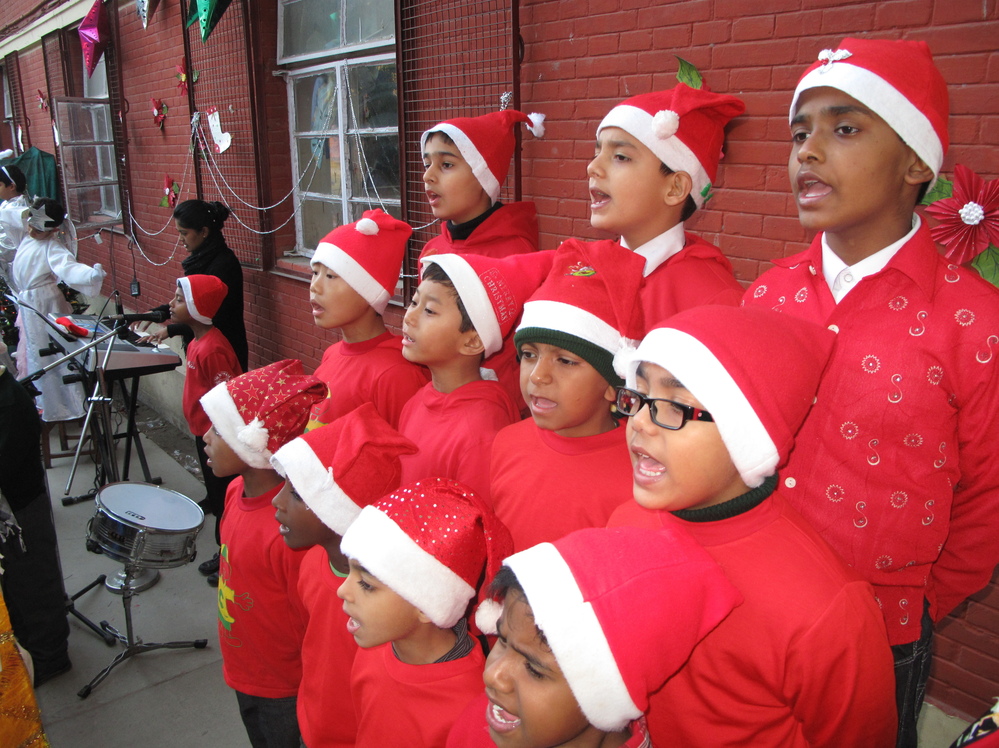
Carolers from St. Columba's School in New Delhi stage their annual Christmas program, where the student body is Catholic, Sikh and Hindu.

Julie McCarthy/NPR Carolers from St. Columba's School in New Delhi stage their annual Christmas program, where the student body is Catholic, Sikh and Hindu. Carolers from St. Columba's School in New Delhi stage their annual Christmas program, where the student body is Catholic, Sikh and Hindu.

Julie McCarthy/NPR

India, the birthplace of Hinduism, Buddhism and Sikhism, marks the birth of Jesus with a national holiday.

Indians call Christmas bara din, or the Big Day.

Chef Bhakshish Dean, a Punjabi Christian, traces the roots of Christianity in India through food.

Standing in the New Delhi kitchen of one of several restaurants he overseas, pots bubbling with scrumptious holiday specials, Dean says Syrian Christians were the first to arrive in India, in the first century. The ancient sect devoted to St. Thomas the Apostle is believed to have first landed on the Indian coast in what is today the state of Kerala. He says they came with the fabled spice trade, intermarried and introduced their cuisine.

Dean's Syrian stews, which top his Christmas menu, are infused with the scents of South Indian cloves, cardamom and star anise — a star-shaped spice with a hint of licorice that is popular in cooking throughout South Asia.

Christmas cakes filled the window at Wenger's, the fabled 86-year-old bakery in Delhi.

Julie McCarthy/NPR Christmas cakes filled the window at Wenger's, the fabled 86-year-old bakery in Delhi. Christmas cakes filled the window at Wenger's, the fabled 86-year-old bakery in Delhi.

Julie McCarthy/NPR

Just 2 percent of the Indian population is Christian, but writer Naresh Fernandes says, "That's 2 percent of the population of one billion. So that is quite a lot of people for whom December 25th is very important."

Fernandes says in his Roman Catholic neighborhood in Mumbai, the Portuguese converted the locals and Christmas tends to be "big opulent meals" that start in the afternoon and go late into the night. "Things like vindaloo, which is a preparation made of pork," he says, adding, "no roast turkeys, but lots of things involving fat and pig-lings."

The British Raj also may have fixed Christmas in the Indian imagination as quintessentially English: the requisite roasted turkey and tipple of mulled wine. They'll grace many Yuletide tables of Delhi's sizable expatriate community.

Delhi-based food writer Pamela Timms says she's managed to Indian-nize her traditional recipe for mince pies, which includes "glacee cherries."

"I found out this year they are not actually cherries in India," she says. "They are made from a local berry called karonda, which is pink and white in its natural state but once you add sugar to it and boil it away, it looks like a glacee cherry."

As a long-time resident of India, Timms says Christmas seems to slot right into the pantheon of festivals in the Indian calendar. "It's a time of year that comes right after lots of other Indian festivals, so the country is already in festival mode," she says.

Carolers from St. Columba's School in the capital stage their annual Christmas program that expresses the multifaith nature of India. This alma mater of health guru Deepak Chopra was founded by the Christian Brothers of Ireland, and while it is a Catholic school, the student body is also Sikh and Hindu.

Arsh Wahi, a Hindu student at St. Columba's, says his family puts up a Christmas tree every year and stocks up on plum pudding and other Christmas goodies from the fabled Dehli bakery called Wenger's.

With its 70 varieties of cakes in the shape of stars, yule logs and Santas, this 86-year-old establishment is jammed this time of year with holiday-makers who eat and sing their way through the season.

Choirs echo in the churches across the city, and choral groups perform Christmas concerts.

Neeraj Devraj, a soloist with The Capital City Minstrels, says he's not Christian or religious, but celebrates Christmas with the same fervor he celebrates the Hindu festival of lights known as Diwali, and the Muslim feast of Eid.

"For me personally, Christmas is about getting together with the people you are fond of, people you love," he says. "It's great fun, it's the joy of giving. It's very Indian ... to just celebrate the aspect of being alive and being around people who matter."


View the original article here

Thursday, 20 December 2012

Gospel Diva Vicki Yohe On 'Sounding Black'

Vicki Yohe has blond hair, blue eyes, and the look of a country-western singer. But she's an urban gospel music star and most of her fans are black. Yohe talks with host Michel Martin about race, music, faith, and her latest album, I'm at Peace: A Praise and Worship Experience.


View the original article here

Wine And Food May Rekindle Love Lost Between Russia And Georgia

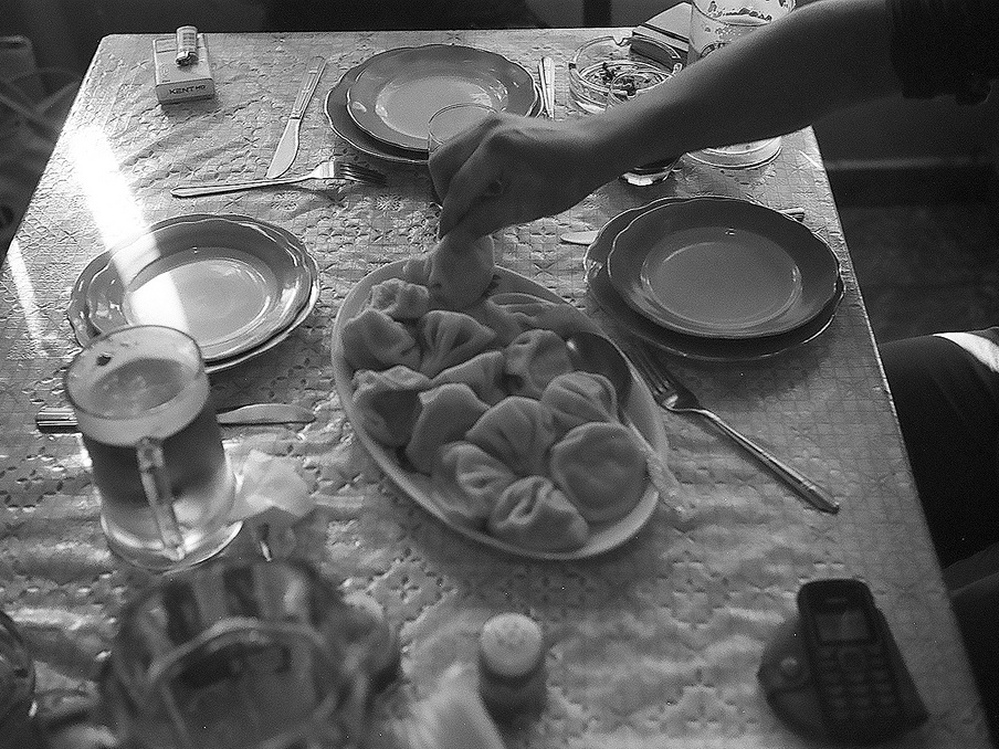
Eating lamb dumplings called khinkali at a table in Tbilisi, Georgia.

ostromentsky/Flickr.com Eating lamb dumplings called khinkali at a table in Tbilisi, Georgia. Eating lamb dumplings called khinkali at a table in Tbilisi, Georgia.

ostromentsky/Flickr.com

It's a big day in the religious and culinary calendar of the Republic of Georgia. Georgian Orthodox believers observe Dec. 17 as St. Barbara's Day, in honor of an early Christian martyr. And they typically mark the occasion by eating a type of stuffed bread called lobiani, baked with a filling of boiled beans with coriander and onions.

It's a tradition that's also observed at many restaurants in Russia, where Georgian food is the favorite foreign cuisine — fresher, spicier and more imaginative cooking than many Russians ever get at home. In fact, Georgian cookery is to Russia what Italian cuisine is to America — a national education of the taste buds, an illustration of the lesson that at the heart of the good life is good food.

The Russian love of Georgian food is made more poignant by the fact that the two countries have been at odds since before their brief 2008 war.

Georgian cuisine takes its inspiration from the country's geography, perched in the mountains at the eastern edge of the Black Sea, strongly original, but with elements of the Middle East, Central Asia and Eastern Europe.

Dinner at a typical Georgian restaurant starts with an array of appetizers that include khachapuri, a rich, cheese-filled bread that comes in all sorts of regional variations.

Have a side of veggies with that, such as Badrijani nigvzit, eggplant with ground walnuts, pomegranates seeds and juice, or ajapsandali, a spicy concoction of eggplant, potatoes, tomatoes and peppers.

If you go to a restaurant with Georgian friends, you'll be made to eat your way through salads, meaty soups such as kharcho, and salty cheeses called sulguni before you're even allowed to contemplate the entrees.

Then it's on to fish done 21 ways, or satsivi, which is chicken or turkey in a walnut sauce, or chakapuli lamb stew.

In case you've noticed that walnuts feature prominently in many Georgian recipes, you will have touched upon a tender point of Georgian pride.

Some Georgians in Russia claim that greedy Russian restaurant owners have ruined the flavor of the most popular Georgian dishes by substituting corn meal for ground walnuts. Now that would be like fobbing off canned spaghetti for the genuine al dente at an Italian restaurant in New Jersey.

At some point in your culinary odyssey, you'll get to the khinkali, dumpling purses filled with lamb and hot broth.

Khinkali dough is pinched together to form a stem, which you hold while nibbling a hole in the dumpling, through which you sip the juice before devouring the filling.

In Georgia, all this would be washed down with pitchers of wine, but here's where geopolitics have gotten in the way of gastronomy.

As a side effect of the bitter conflict between Russia and Georgia, imports of Georgian wine and mineral water are banned in Russia.

Georgian restaurants in Moscow make do with imports from France, Chile and Australia, but Georgian food lovers will tell you it's not the same.

Since October, when elections brought a new regime to power in Georgia, hopes have been raised that the wine ban might be lifted as a gesture of good will. Since most of Georgia's wine had been imported to Russia before the war, it may be a real economic gesture as well.

And just last week, diplomats from the two countries met in Switzerland for their first direct talks since the war.

Both Russians and Georgians have described their national relationship as something like a passionate love affair gone sour—maybe wine and walnuts can help restore the magic.


View the original article here

Spiritual Strength In Times Of Great Need

For nearly 30 years, Eugene Peterson served as the pastor for Christ our King Presbyterian Church near Baltimore. In the early 1990s, he began to translate the Bible into modern-day English. It became the best-selling book called The Message, a book millions of Christians and non-Christians have come to rely on. Host Guy Raz talks with Peterson about dealing with grief and moments of tragedy.

Copyright © 2012 National Public Radio. For personal, noncommercial use only. See Terms of Use. For other uses, prior permission required.

GUY RAZ, HOST:

Today and tomorrow, many people around the country will turn to their spiritual leaders for answers or at least for comfort. For nearly 30 years, Eugene Peterson served as the pastor for Christ Our King Presbyterian Church near Baltimore. In the early 1990s, he began to translate the Bible into modern-day English. It became the best-selling book called "The Message." It's a book millions of Christians and non-Christians have come to rely on.

Pastor Peterson has been a guest on this program in the past. And he was one of the first people we wanted to talk to after hearing the news from Newtown, Connecticut. And he's with me on the line now. And, Pastor Peterson, thank you for being with us.

REVEREND EUGENE PETERSON: I'm glad to be here.

RAZ: How do you retain your faith when you're faced with such a senseless tragedy?

PETERSON: Oh, I think about that; I think about that a lot. And everybody is just rocked by this disaster, tragedy in Connecticut. And one of the things that occurred to me as I was meditating, praying, thinking about this is the one good thing about this is that I feel like I'm so much part of a united community in America.

And I thought as I woke up this morning, Jesus' second Beatitude: Blessed are those who mourn for they shall be comforted. It doesn't mitigate the suffering, the mourning, the loss, but it does give witness that we live in a country with a president who knows how to mourn. That's what I've been thinking about this morning.

RAZ: How do you begin to cope with a kind of grief like this?

PETERSON: By not talking too much about it. Silence is sometimes the best thing to do, holding a hand, hugging somebody. There are no adages that explain or would make any difference to the suffering. Sometimes people say, I don't know what to say to these people. You know, I say don't say anything. Just hold their hand. Hold them, hug them and just stay around for an hour or so in silence and just be there. That's what we need at times like this, an affirmation of the sacredness of life, the holiness of life.

RAZ: I know that you gave thousands of sermons over your three decades as a pastor. And, of course, during times of crisis and in times of grief, what have you done in moments of grief? What has comforted you?

PETERSON: The presence of friends, mostly their silence, not talking too much. I remember when my mother died, and I had the funeral, and I broke down in the middle of this homily, of the Scripture reading. And I tried to contain myself, and I couldn't, and so I finally just cried. It didn't last long, maybe 20 seconds or 30 seconds. And when the service was over, I didn't want to talk to anybody. And I went into a little side room - it was not my own congregation - and sat. And my daughter came in and sat beside me. And she was about 25, 24 at the time.

And a man came in I didn't know. And he put his arm across my shoulders, and he started giving me cliches and talking God talk. And after a few minutes of that, he left. And I said to my daughter Karen: Oh, Karen, I hope I've never done that to anybody. And she said - she was so dear. She says: Oh, daddy, I don't think you'd ever do that. But I had done that. But you learn not to do that when you've been through this a few times.

RAZ: That's the pastor, scholar and poet Eugene Peterson. He's the author of "The Message." Pastor, thank you so much.

PETERSON: You're welcome. Thank you.

Copyright © 2012 National Public Radio. All rights reserved. No quotes from the materials contained herein may be used in any media without attribution to National Public Radio. This transcript is provided for personal, noncommercial use only, pursuant to our Terms of Use. Any other use requires NPR's prior permission. Visit our permissions page for further information.

NPR transcripts are created on a rush deadline by a contractor for NPR, and accuracy and availability may vary. This text may not be in its final form and may be updated or revised in the future. Please be aware that the authoritative record of NPR's programming is the audio.


View the original article here
Mormon Women Dare To Wear Pants To Church

There may be fewer skirts sighted outside Mormon churches in Salt Lake City this Sunday.

There may be fewer skirts sighted outside Mormon churches in Salt Lake City this Sunday.

George Frey/Getty Images

Sunday morning could see a pants revolution at church, at least if you're Mormon. A group of women in The Church of Jesus Christ of Latter-day Saints is inviting all sisters to shed their skirts and dresses, and wear slacks or pantsuits in an attempt to change the conservative dress code.

Worship services in the LDS church aren't formal; "Sunday Best" hasn't meant gloves, hats and tights for decades. These days in most American congregations, the women wear skirts and the men wear ties. Stephanie Lauritzen discovered that pants on women can still raise eyebrows at her congregation in Utah.

"People were afraid to talk to me. People who would never hesitate to talk to me in a skirt and heels were suddenly reluctant to talk to me wearing pants," she says.

A little fed up with the ossified gender roles this represented, Lauritzen created an event on Facebook, called it "Wear Pants to Church Day," and started inviting her friends. Thousands of people all over the country have signed up. Others commented that it was a bad idea. Lauritzen points out that Mormon church leaders haven't actually taken a position on pants.

"You think we'd have won that battle — we have won that battle. Now we're just fighting a cultural norm," she says.

It's a cultural norm that has gotten harder to pin down as American attire gets more and more casual. A few people in the pews on any given Sunday look like they're stopping in for a prayer on the way to a football game. Mormon women — and women in general — see few modest style icons.

"I think people like, say, Kate Middleton, who maintain a conservative nature while wearing fashionable clothes that look good on them," says Michaela Carey, an economics researcher in Chicago. She's not wearing pants to church this Sunday. Not because the duchess of Cambridge isn't often seen in pants, but because she feels like this movement won't do much to advance the conversation about gender equality.

Mercedes White, Carey's sister-in-law in Salt Lake City, feels differently. "It's not official. It is happening informally, that women are being told what to wear," she says. "And I think that needs to be pushed back against."

White says she wears pants to church with some frequency. She thinks they're more stylish, comfortable and practical than skirts, especially in the Salt Lake winter.

Rebecca Van Uitert, a lawyer in Chicago and a leader in her congregation, will wear slacks Sunday, to help other women feel welcome however they dress. "I'm kind of neutral about what people wear to church. I'm just happy when people are there," Van Uitert says.

Her sentiment is familiar to clergy across many other faiths: Whatever you decide to put on, for heaven's sake, just come to church.


View the original article here

Mormon Church Launches Website On 'Same-Sex Attraction'

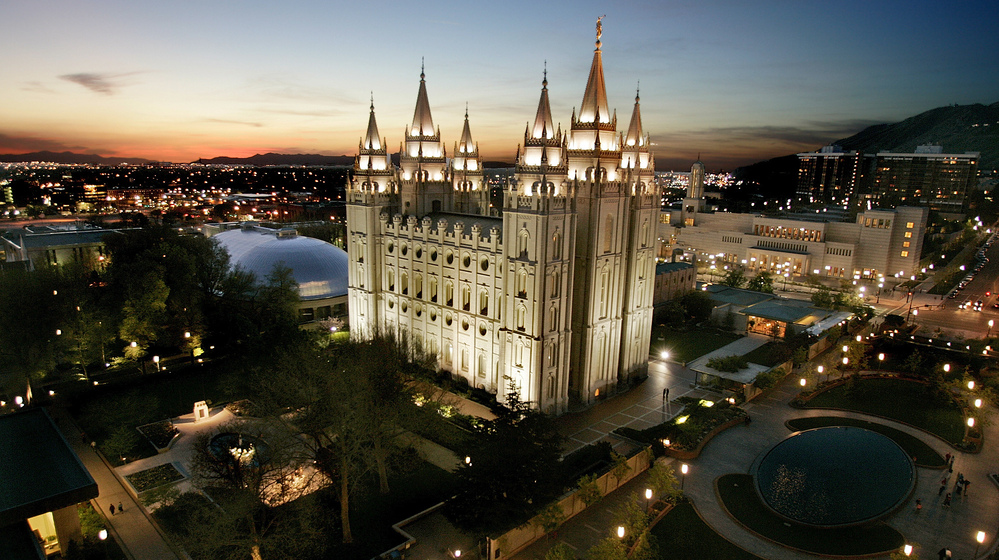
The Church of Jesus Christ of Latter-day Saints headquarters in Salt Lake City, Utah.

Douglas C. Pizac/AP The Church of Jesus Christ of Latter-day Saints headquarters in Salt Lake City, Utah. The Church of Jesus Christ of Latter-day Saints headquarters in Salt Lake City, Utah.

Douglas C. Pizac/AP

The Mormon Church has a new website to clarify its position on "same-sex attraction" and to reach out to all of its members, including gays and lesbians, "with love and understanding."

The launching of mormonsandgays.org follows persistent criticism of Mormon involvement in California's ballot measure banning gay marriage, NPR's Howard Berkes reports. Berkes tells our Newscast Desk that scrutiny continued through Mitt Romney's campaign for president.

In a press release, Church spokesman Michael Purdy says the site was produced over the course of two years "and puts the entire issue in context." The site includes a number of videos from church leaders and members who share personal experiences.

Berkes adds:

"The faith still steadfastly opposes gay marriage but urges compassion and understanding, and encourages gay Mormons to remain in the faith. Church leader Dallin Oaks says on the website it's no sin to have inclinations. He says the sin is in yielding to temptations."

The church doctrine "has not changed and is not changing," Oaks says in a video. But, he continues, "what is changing and what needs to change is to help our own members and families understand how to deal with same-gender attraction."

Oaks, Slate says, "does not say that Mormon doctrine will not change." Slate continues:

"On one level, this is simply good Mormonism: The LDS Church believes in continual revelation through a living prophet, so no apostle can declare with certainty that something will never change.

"And the new website, which is hardly a celebration of gay pride, is also a savvy bit of public relations: Brad Kramer, an anthropologist at the University of Michigan who studies contemporary Mormonism (and who is Mormon himself), called the site 'an example of the curious space where PR and doctrinal shift intersect and subtly cooperate.' "

Gay rights activists met with some LDS officials in May in Salt Lake City, and Equality Ride co-director Jason Conner told The Salt Lake Tribune at the time that the church would try to use "more inclusive language."

Update at 10:50 p.m. ET. What's Changed:

Berkes, who has covered the Mormon church for three decades, has this further analysis of the website:

"It isn't the message that's striking about mormonsandgays.org, it's the medium.

"The belief that marriage can only be between a man and a woman is fundamental to Mormon doctrine. It stems from the notion that marriage is eternal and that families are joined for eternity in the afterlife. Mormon Apostle Russell Ballard explained this belief during in interview with NPR in 2009. Despite the revelatory nature of the faith, this concept of marriage is not something that is likely to change.

"What is changing for Mormons is the medium for the message. Mormon leaders responded to the criticism over their direct and organized support for Prop. 8 in California with attempts to describe nuances about their approach to 'same-sex attraction.'

"They actually supported an effort in Utah to prohibit housing and job discrimination based on sexual preference, and they didn't oppose health care benefits for same-sex couples in Salt Lake City, as KSL in Utah reported in 2009.

"But the characterization of Mormonism as homophobic continued right through the presidential campaign of Mitt Romney. Gay rights activists told the church that its participation in the Prop. 8 debate and vigorous opposition to gay marriage contributed to dismissiveness and harsh treatment of gays.

"So, Mormon leaders now reach out with a website, explaining directly to readers its nuanced position and urging more explicitly than before compassion and understanding.

"This is just the latest use of digital and social media by the faith, and it seems the most ambitious attempt to date. Gay Mormons are among those speaking publicly and forthrightly in ways that were unimaginable just a few years ago, especially on an official Mormon website.

"So, there's no change in doctrine and the message hasn't really changed. But it has a new framework in a new medium. It's an attempt to calm fears, quell criticism and appeal to civility, and there's nothing in it that even remotely suggests that Mormon leaders will ever reject key fundamentals of their faith and accept gay marriage."


View the original article here

Reverend Run: From Rapper To Preacher

Rap pioneer Joseph Simmons, also known as 'Run' of Run DMC, had a successful music career spanning more than three decades. For Tell Me More's 'Wisdom Watch' series, host Michel Martin talks with Rev. Run about his evolution from rapper to preacher.

Copyright © 2012 National Public Radio. For personal, noncommercial use only. See Terms of Use. For other uses, prior permission required.

MICHEL MARTIN, HOST:

I'm Michel Martin and this is TELL ME MORE from NPR News. Later in the program I will share a few thoughts in my Can I Just Tell You essay but now it's time for our Wisdom Watch conversation. That's the part of the program where we speak with those whose work has made a difference. Today we are speaking with a hip-hop pioneer.

Even casual listeners of contemporary music have most likely heard of the rap trio Run-DMC. They dominated the scene in the early 1980s and helped make rap music one of this country's most popular musical genres. They did it with danceable beats, interesting, accessible lyrics, as well as collaborations like this 1986 hit with Aerosmith called "Walk This Way."

(SOUNDBITE OF SONG, "WALK THIS WAY")

RUN-DMC: (Rapping) It wasn't me she was fooling 'cause she knew what she was doing when she told me how to walk this way. She told me to...

AEROSMITH: (Singing) Walk this way. Talk this way...

MARTIN: As often happens, members of the group eventually went their separate ways. But Run, Joseph Simmons, went in what some might find a particularly interesting direction. He became an ordained minister in the Pentecostal tradition, married his high school sweetheart Justine, and they went on to star together in a popular reality show on MTV called "Run's House."

And we thought this holiday season might be a good time to hear from him. And Joseph Simmons, Reverend Run, welcome. Thanks for joining us.

REVEREND JOSEPH: Thank you for having me.

MARTIN: As we mentioned, you are an ordained minister. At this stage of your life I'm betting that there are some people who only know you as Reverend Run, right? I'm guessing there's like a whole generation of people...

J. SIMMONS: Yeah.

MARTIN: ...for whom that's the primary reason they know you. How did your call to ministry happen? Was it like a gradual process? Was it like a thunderclap?

J. SIMMONS: It was like a gradual thunderclap. So it was a little of both. I made the album "Raising Hell." Then we made the record "Tougher Than Leather." Around "Tougher Than Leather" I started to feel a little uncomfortable, saw some funny things happening around me.

Records sales weren't as high as they was. I was a little unhappy with what was going on so I started going to church. And when I started going to church I started to feel better. Things were starting to look brighter for me. I started to see that learning the principles of God was helping to shape my life better.

And in the black church most people know that when you're in the church you're going to do something. You're going to be on the choir. You're going to be a deacon. You're going to be on the board. You're going to be an usher. You know, something that we do in the church is you take a kind of a position.

And next thing you know, after doing some ushering and I was a deacon - you know, they give you these titles - I ended up being a reverend.

MARTIN: Well, how did you envision your life unfolding once you decided to take that route?

J. SIMMONS: I didn't know how it was going to unfold at first but I started to become very passionate and watching the pastors in different churches in different places. And I saw how grounded and how organized their families were and how cool they were. So I thought that this would be great for me too as I was becoming a minister.

You know, just kind of like the collar got wrapped around my neck. I don't know how it happened. I started to usher; I ended up a reverend. And I thought it was something that was pretty creative about being a reverend, pretty cool about words of wisdom and speaking to people and speaking into their lives.

So, you know, it was a certain, in my mind, a swag about it. We ended up getting the show on MTV with me and my wife and my kids. People were looking at me as I was becoming a reverend saying, you know, this is a reality show, man. Like rapper become reverend.

And I was like, oh, really? Hmm. Never thought of it like that. Next thing you know, that became my pulpit. Just for me to have a platform to help people in their lives. You know, it was a standard that I was setting. You ask that...

MARTIN: Well, hold on a second. Let me play a short clip from the series. As we mentioned, your reality show "Run's House" was popular. It ran a number of seasons. And you really made a point of showcasing your role as not just a, you know, entertainer but as dad. And I just want to play a short clip from that. Here it is.

(SOUNDBITE OF TV SHOW, "RUN'S HOUSE")

J. SIMMONS: Ah, isn't this just a beautiful sight? Sun pounding down on my bald head. You see this sweat, Dig? It's the sweat of a father that loves you.

DIGGY SIMMONS: I love you. But don't touch me with that sweat.

J. SIMMONS: You came here not wanting to have fun 'cause you were too cool to let go and enjoy the family vacation. But come on, Dig. You know you loved it here.

D. SIMMONS: I liked it.

J. SIMMONS: To tell the truth, you've really become a man on this trip. And I vow to you, treat you like a man. You only going to get man jobs. That means you're going to have to pay the bills, talk to the accountants, get up at 6:00 A.M. and drive yourself to school.

(LAUGHTER)

MARTIN: OK. Yes. The story went from there. As we mentioned, maybe people don't get that this is where you're talking to your son. You're trying to impart - which is a lot of what the program was about, trying to impart some life lessons. Who were you hoping would watch the show and benefit from it?

J. SIMMONS: Everybody.

MARTIN: Well, what about that? You know, one of the reasons this interests me, well, a couple of reasons, is that a lot of people who have been through the reality show experience, their families have really suffered as a result. "The Real Housewives of D.C." for example, all of the principals in that show either are separated or divorced now. Were you ever concerned that this would have an impact on your family life?

J. SIMMONS: I went into it not so much for fame, I went into the show, it was my ministry. I told my family that from the beginning, we will show our family on television but we will teach. Each show had a lesson. And it was the truth. I was always teaching a lesson in my house anyway, and at the end of every show I'd do a word of wisdom from my bathtub and that's what I was doing anyway. I'd send out words in the morning to my friends, and whatever the show was - 'cause there's always a conflict in your home. So there'd be a conflict, I would try to solve it on camera, whether it was my son breaking his Game Boy over and over or whatever it is, I'd wait until the cameras were rolling to solve a problem and bring it to a good head and then do the word of wisdom at the end. So we weren't so caught up in it where it affected us the way it has some other families, because it was a ministry.

MARTIN: If you're just joining us, you're listening to TELL ME MORE from NPR News. I'm Michel Martin. We are speaking with hip-hop legend Reverend Run. He was the Run in Run DMC. We're talking about his long career, what he's up to now, and hopefully he's going to share some wisdom with us in a few minutes.

You mentioned growing up in Hollis, which is in Queens, you know, I have to play - it is that holiday season - I've got to play a little bit from "Christmas in Hollis." I must drop it.

J. SIMMONS: OK.

MARTIN: It is that time of year.

J. SIMMONS: Hit it.

(SOUNDBITE OF SONG, "CHRISTMAS IN HOLLIS")

RUN-DMC: (Rapping) It was December 24th on Hollis Ave after dark when I see a man chilling with his dog in the park. I approached him very slowly with my heart full of fear. Looked at his dog, oh my God, an ill reindeer. But then I was illin' because the man had a beard and a bag full of goodies, 12 o'clock had neared. So I turned my head a second and the man had gone. But he must have dropped his wallet smack down on the lawn.

(Rapping) I picket the wallet up then I took a pause. Took out the license and it cold said Santa Claus. A million dollars in it, cold hundreds of G's, enough to buy a boat and matching car with ease. But I'd never steal from Santa, 'cause that ain't right. So I was going home to mail it back to him that night. But when I got home I bugged, cause under the tree. Was a letter from Santa and the dough's for me.

MARTIN: What doesn't love that?

(LAUGHTER)

MARTIN: Who doesn't love that?

J. SIMMONS: I wrote that and at the time he just jumped in my mind and I just flowed, my pen just kind of took over.

MARTIN: I was going to ask you that. Where did you get the idea?

J. SIMMONS: Well, I took over. Well, a old publicist of mine, Bill Adler, called with a opportunity to be on an album called "Special Olympics." And I was just sitting there and I came up with the story about a kid running into Santa Claus On Hollis Avenue, Santa Claus losing his wallet, the kid having a good heart, trying to return the wallet and Santa Claus sending back the wallet saying, thank you for returning it but I dropped it on purpose. I saw you looking at me. That money was for you. And that was, it was funny, great, but it was also a story of a kid trying to do the right thing and passing the test and God saying, well done. Good job. So I was a reverend before I was a reverend.

MARTIN: You were. I was going to say you were a reverend before you were a reverend. And one of the things about the song I think a lot of people, people still love this song. Did you at the time, you know, one of the things that's so funny about it is that the time, you know, hip-hop rap was seen as so transgressive. And now it's, as we know, one of the top musical genres in the United States. At the time when you put the song out there did you think you were doing something, you know, out-of-the-box. Or did it just seem...

J. SIMMONS: Well, you know...

MARTIN: You know what I mean? Did it seem as special as it was?

J. SIMMONS: My father was a poet and he actually, I have that in me, you know, I was write - it was poetry for me. When I finished that rhyme, in my heart, like I said, the pen was taking over. I couldn't, it was almost like I wasn't writing. Sometimes stars line up or whatever it is, it just fell in place. And the rhyme meant a lot a lot to me that, you know, I was going back to mail Santa his wallet that night and got home, I bugged 'cause under the tree was a letter from Santa and the dough was for me. I knew that was a powerful, interesting, funny, incredible rhyme.

MARTIN: But I also, you mentioned earlier that you kind of feel in a way you've always had ministry in you. You are now working as a paid spokesperson -that has to be said...

J. SIMMONS: OK.

MARTIN: ...on a diabetes awareness campaign, partnering with Novo Nordisk. I'll want to mention here, they're also NPR underwriters. But how did you get interested in this? You yourself don't suffer from diabetes.

J. SIMMONS: No, I don't have diabetes but my father did. My manager, his father died from complications of diabetes and he called me about it and I told him, you know what? My father also had diabetes. He's like, whoa. And he was like Rev you're at that age, you're 48 years old, once you get 45, you're African-American, then you are at risk. As a matter of fact, African-Americans are at risk double the amount. So we had a meeting over at Novo Nordisk and I told them, you know, they knew I was a minister and I was a reverend, and I knew at that moment that it was God calling me. So this is my message that health is your first wealth. A lot of people are afraid to get tested. They don't want to know the answer. And like, Rev, I'm scared. I just tell them do it afraid. Afraid might not leave but do it afraid and you'll conquer this. When I'm speaking about diabetes and telling people to get screened, they know that it's coming from a pure place, a place where not only am I telling them, I'm eating better. Everything is in moderation and I lost 22 pounds, so I'm happy about that and I'm still losing weight and made a decision today to have, you know, half a piece of bread because we know that bread turns into sugar. And I didn't have a real burger, I had a turkey burger. It doesn't taste exactly the same but, you know, I had my share of real burgers so I can calm down a little bit.

MARTIN: What's next for you? I mean as a person who achieved real success and fame at a very young age. And many people might know that you are in a number of halls of fame, for example, I mean your place in, you know, music history in this country is well assured at this point. I mean what's, but in your - you're still a young man. I mean so what's next?

J. SIMMONS: Ministry is my top priority. I mean I did a couple of shows with Darrell, DMC earlier this year, but this is it. I have a book coming called "Manology" with a close friend of mine, Tyrese Gipson of "Transformers" fame and of "Fast and Furious," and we're talking to people about relationships.

MARTIN: Well, give us - can you give us a hint?

J. SIMMONS: Yeah, the book is called "Manology" and it's coming out...

(LAUGHTER)

MARTIN: Give us one...

J. SIMMONS: Simon & Schuster.

MARTIN: Give us some of your - give us a taste.

J. SIMMONS: Well, I can't let the cat out of bag. I can tell you that "Manology" is going to be raw, uncomfortable truth for some people. It's a big deal and it will be out in February.

MARTIN: You've been offering some words of wisdom. But as you mentioned, you used to offer words of wisdom from the bathtub at the end of your reality show. What's up with the bathtub, by the way? Why were you in the bathtub?

J. SIMMONS: I think baths. It's like...

MARTIN: Well, yeah, I did too. But I don't...

J. SIMMONS: I need to be clean.

(LAUGHTER)

J. SIMMONS: No. But everybody takes showers. I'm...

MARTIN: Was that were you did your good thinking was at your bathtub?

J. SIMMONS: Yeah, I relax in the bathtub.

MARTIN: But do I have it right, that you had bubble - you did have bubbles in the bathtub on the show because...

J. SIMMONS: I had to have bubbles on the show. You want to see all what was going on.

MARTIN: You didn't want to see all that.

(LAUGHTER)

J. SIMMONS: That's not what you're here for.

MARTIN: I got you. Before we let you go, can you offer us some words of wisdom? As we mentioned, this is the segment we call Wisdom Watch where we like to ask people if they have some wisdom to share.

J. SIMMONS: Well, I do.

MARTIN: Can you share some?

J. SIMMONS: Something jumped right in my mind when you said that. And that is, do what you got to do so you can do what you want to do. You have to go get tested. You want to live a happy life. So for me, whatever it is that's the responsibility that's ahead of you, you have to make sure that you take responsibility so you can have a good life. You know what I mean?

MARTIN: Rev. Run, the "Run" of the pioneering rap group Run-DMC, is now a motivational speaker, an ordained minister in the Pentecostal tradition, a hip-hop pioneer and legend. He was kind enough to join us from our bureau in New York.

Rev. Run, thank you so much for speaking with us. Happy Holidays to you.

J. SIMMONS: Happy Holidays to you. Thank you.

(SOUNDBITE OF SONG, "CHRISTMAS IN HOLLIS")

RUN-DMC: (Rapping) Snow's on the ground, snow white so bright. In the fireplace is the Yule log. Beneath the mistletoe...

Copyright © 2012 National Public Radio. All rights reserved. No quotes from the materials contained herein may be used in any media without attribution to National Public Radio. This transcript is provided for personal, noncommercial use only, pursuant to our Terms of Use. Any other use requires NPR's prior permission. Visit our permissions page for further information.

NPR transcripts are created on a rush deadline by a contractor for NPR, and accuracy and availability may vary. This text may not be in its final form and may be updated or revised in the future. Please be aware that the authoritative record of NPR's programming is the audio.


View the original article here

Singing Loud And Proud: Choir For LGBT Mormons Breaks Out

A previous Web version of this story incorrectly identified Catherine Jeppsen as a professor at Brigham Young University. Jeppsen is an adjunct faculty member.

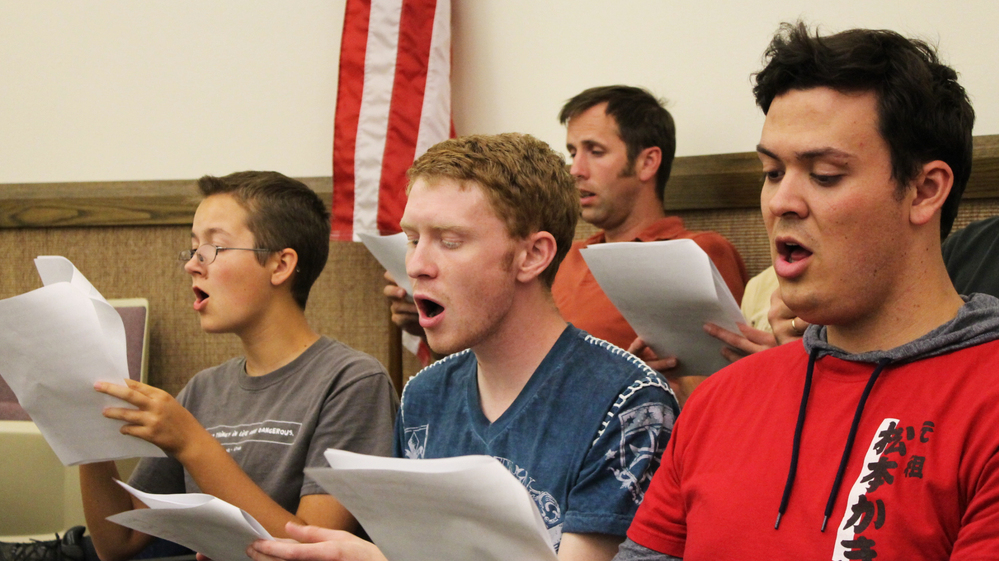
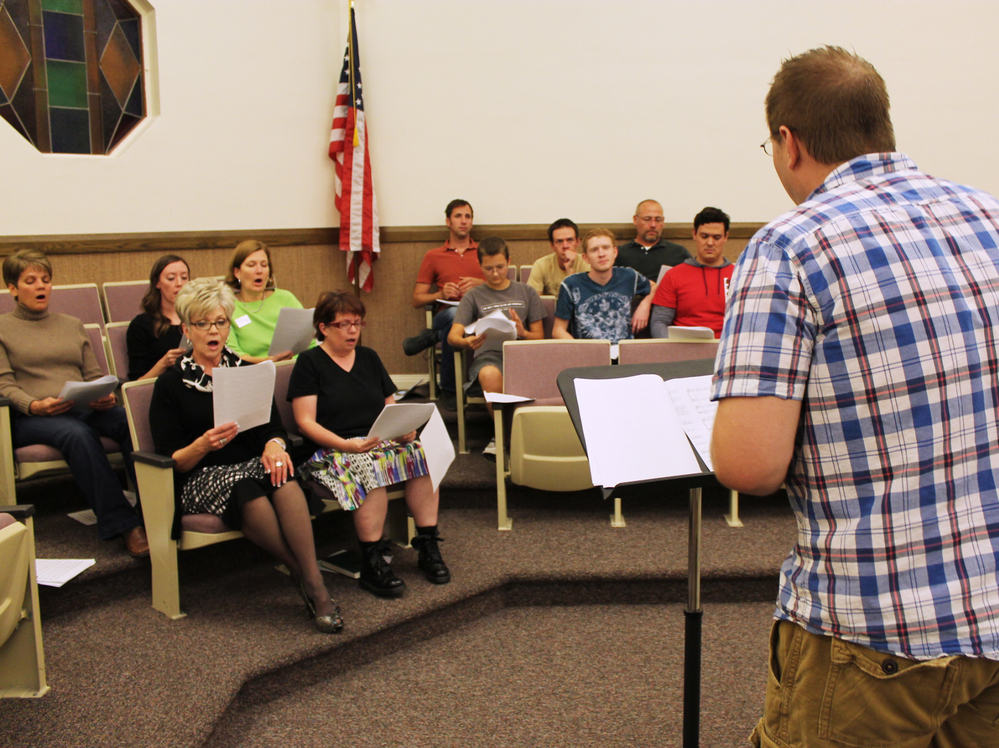
The One Voice Choir is not officially part of The Church of Jesus Christ of Latter-day Saints, but the ensemble is invited to perform this weekend at an LDS church-sponsored event intended to reach out to the LGBT community.

Andrea Smardon/KUER The One Voice Choir is not officially part of The Church of Jesus Christ of Latter-day Saints, but the ensemble is invited to perform this weekend at an LDS church-sponsored event intended to reach out to the LGBT community. The One Voice Choir is not officially part of The Church of Jesus Christ of Latter-day Saints, but the ensemble is invited to perform this weekend at an LDS church-sponsored event intended to reach out to the LGBT community.

Andrea Smardon/KUER

Growing up in Utah, Ross Owen watched the Mormon Tabernacle Choir on television every Sunday with his family.

"It was almost like watching a rock concert, and I thought, 'Oh, I'd love to do that,' " he says.

But by the time Owen was old enough to join the choir, he was no longer a member of The Church of Jesus Christ of Latter-day Saints; he had been excommunicated after he came out as gay.

"I almost feel like I've been mourning giving up that foundation that was there for me for the first 20 years of my life," Owen says. "So, now I'm searching for that spirituality and how to get that spirituality back in my life."

Today, he's a part of a new choir — one that's open to gays, lesbians and Mormons. The ensemble of roughly 15 members, called the One Voice Choir, is not officially part of the LDS church in Utah, but they've been invited to perform at a Mormon church-sponsored outreach event for the lesbian, gay, bisexual and transgender community.

For their first rehearsal, the group congregated at a historic LDS chapel near downtown Salt Lake City. Bryan Horn, the group's musical director, resigned from the church after coming out as gay, but says he's still a Mormon in his heart.

"The primary purpose is to create a space where everybody is loved and everybody is welcome — to simply come together, and as Mormon Christians and non-Mormon Christians, to worship Jesus Christ and proclaim our testimonies of Jesus Christ," Horn says.

Catherine Jeppsen, a self-identified ally, accompanies the group at the rehearsal. She's an adjunct faculty member of gender studies at Brigham Young University and says she's met a number of students suffering from a sense of exclusion.

"I just really feel for people who don't feel accepted in the one place they should," Jeppsen says. "And I want to do everything I can to show them that there are people in the Mormon church who do love and accept them, and want them to feel welcome."

Rexene Pitcher, another member of the group, tears up when she talks about her gay son who withdrew from the church when he no longer felt accepted.

"I'm really happy to see people of the Mormon church coming out and saying we love you just the way you are, and being willing to show it," Pitcher says.

Unlike Pitcher's son, 18-year-old choir member Grayson Moore says he hasn't felt compelled to leave the church. Moore identifies as a female-to-male transgender and holds a Temple Recommend — meaning he's a church member in good standing.

The choir's musical director, Bryan Horn, leads the ensemble in rehearsal.

Andrea Smardon/KUER The choir's musical director, Bryan Horn, leads the ensemble in rehearsal. The choir's musical director, Bryan Horn, leads the ensemble in rehearsal.

Andrea Smardon/KUER

"Most people who grow up in the church, when they transition, they just say, 'I'm not allowed to be LDS anymore', and they just give up and walk away," Moore says at a rehearsal. "I want to show people that you don't have to walk away, that just because it can be hard to be LDS and transgender, that doesn't mean it's not worth it."

Before Moore finished his thoughts, an official from the church where the choir was rehearsing requested that the group end practice and leave.

They were told to no longer use that church as a rehearsal space. The local branch president declined to talk about the decision, but said he didn't want the group's presence to become political. Though a church spokesman later apologized to the choir, the doors remain closed.

The rejection was disheartening for Horn, who says it slowed the momentum of the group.

"Honestly, after that I thought about scrapping the whole idea, and I'm like, you know what, that's the sign that God gave me that this is not right at this time," he says.

But luckily, the choir found a new rehearsal home three weeks later at a nearby Methodist church. The group has been prepping for an LDS church event called Outreach Fireside — an occasion Horn notes as a significant stride for the ensemble.

"I think it's showing the church that we're not the enemy. We're just here to sing," he says. "So, the fact that we're being invited to this Christmas Fireside for LGBT Mormons and straight allies, and even curious people who don't know how to handle this topic in the church, it's a great step in the right direction."

Since the choir was formed, the LDS church launched a new website urging Latter-day Saints to reach out more to gay and lesbian members.


View the original article here

Israel, Christians Negotiate The Price Of Holy Water

Patriarch Theophilos III, the Greek Orthodox patriarch of Jerusalem (center), splashes holy water toward worshippers after the washing of the feet ceremony in front of the Church of the Holy Sepulcher in Jerusalem in 2009, during Easter celebrations. A crisis was narrowly averted recently when the church's $2.3 million water bill was waived.

Patriarch Theophilos III, the Greek Orthodox patriarch of Jerusalem (center), splashes holy water toward worshippers after the washing of the feet ceremony in front of the Church of the Holy Sepulcher in Jerusalem in 2009, during Easter celebrations. A crisis was narrowly averted recently when the church's $2.3 million water bill was waived.

Gali Tibbon/AFP/Getty Images

One of the holiest sites in Christendom has also been one of the most contested. The Church of the Holy Sepulcher in Jerusalem lies on the site where Jesus Christ is said to have been crucified and buried.

Multiple Christian denominations share the church uneasily, and clerics sometimes come to blows over the most minor of disputes. The Roman Catholic, Greek Orthodox, Armenian Apostolic, Coptic Orthodox, Ethiopian Orthodox and the Syriac Orthodox all have a presence in the church.

But the most recent conflict at the 4th century church was over something entirely different: an unpaid water bill.

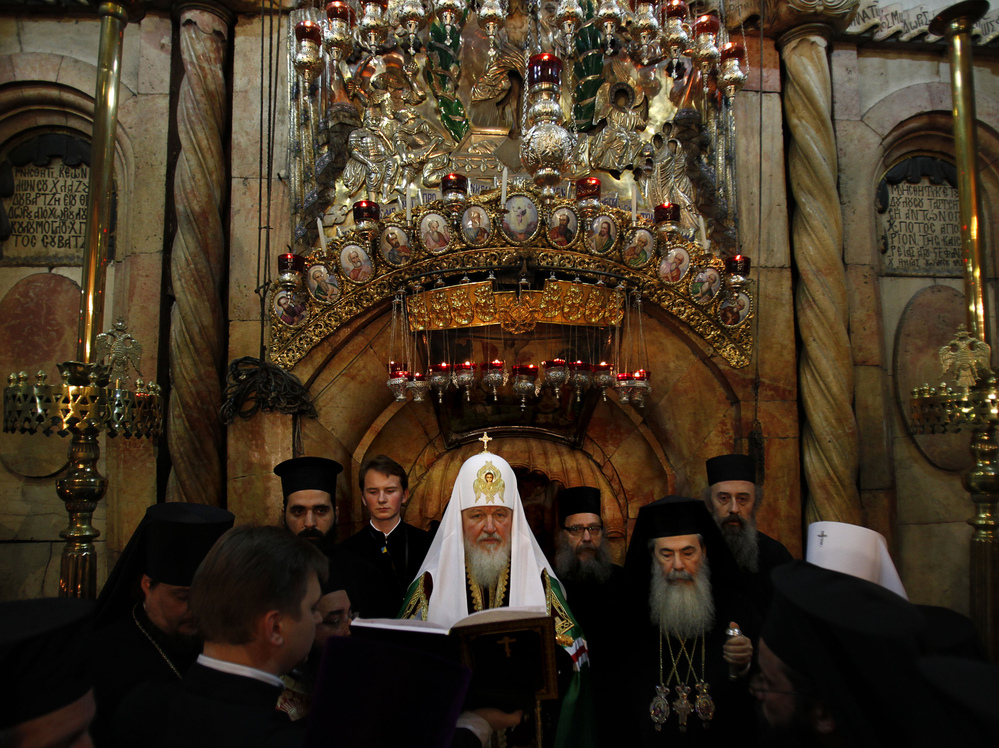
Greek Orthodox Patriarch of Jerusalem Theophilos III (right) and Russian Orthodox Patriarch Kirill (center) pray in front of the tomb of Jesus in the Church of the Holy Sepulcher in November.

Gali Tibbon/AFP/Getty Images Greek Orthodox Patriarch of Jerusalem Theophilos III (right) and Russian Orthodox Patriarch Kirill (center) pray in front of the tomb of Jesus in the Church of the Holy Sepulcher in November. Greek Orthodox Patriarch of Jerusalem Theophilos III (right) and Russian Orthodox Patriarch Kirill (center) pray in front of the tomb of Jesus in the Church of the Holy Sepulcher in November.

Gali Tibbon/AFP/Getty Images

Last month, a dispute over water used by the church nearly closed its doors — until some high-level diplomacy defused the row.

Since the Ottoman Empire, the political authority in Jerusalem had traditionally waived the church's water bills — until the Israeli water company was privatized in 2003. Since then, the charge has grown to 9 million Israeli shekels, or $2.3 million, including interest.

Father Fakitsas Isidoros, superior of the Greek Orthodox Patriarchate, said the water company should settle the problem with the Jerusalem municipal government.

"We are willing, in the future, to pay the bills of water. But the [debts before the] 9 million [are] not our problem," he said. "They have to discuss with the municipality to solve the problem."

The dispute prompted the water company to freeze the patriarchate's local bank account, which Isidoros said caused even more headaches.

"Of course it's very difficult, because we cannot pay the salaries or blessings for our fathers — the electricity, the telephone bills here, everything," he said.

Finally, it took a meeting between Patriarch Kirill, head of the Russian Orthodox Church, and Israeli President Shimon Peres to get the water company to waive the 9 million shekels and the church to promise to start paying for water.

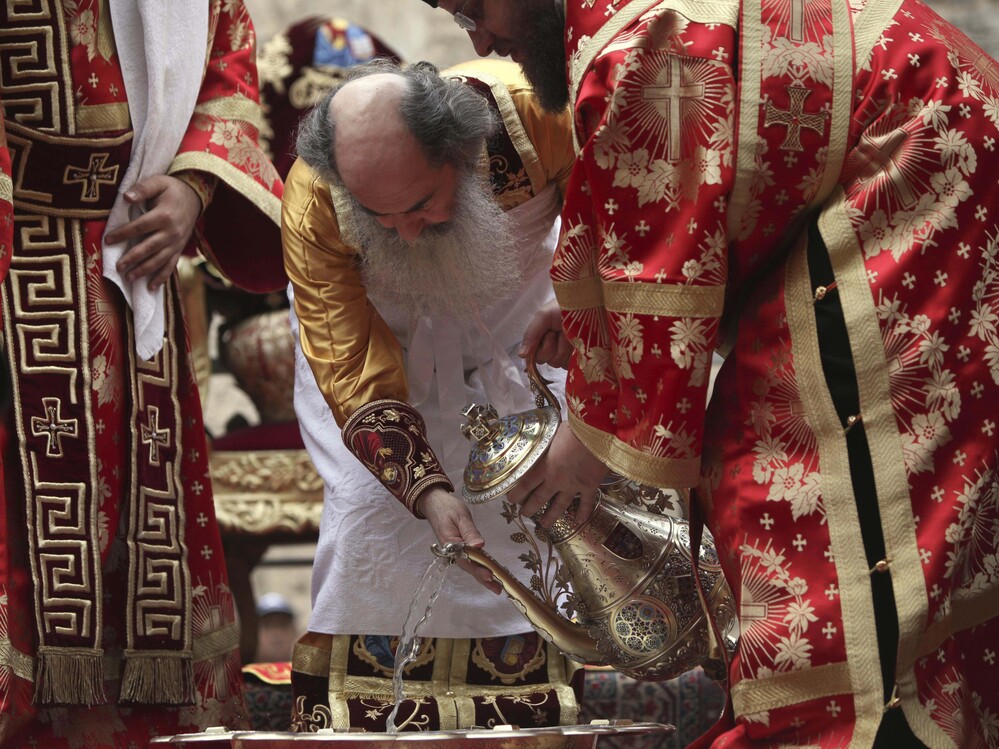
Theofilos III (center) pours water into a basin during the washing of the feet ceremony outside the Church of the Holy Sepulcher in Jerusalem's Old City in April 2011, during Easter celebrations.

Tara Todras-Whitehill/AP Theofilos III (center) pours water into a basin during the washing of the feet ceremony outside the Church of the Holy Sepulcher in Jerusalem's Old City in April 2011, during Easter celebrations. Theofilos III (center) pours water into a basin during the washing of the feet ceremony outside the Church of the Holy Sepulcher in Jerusalem's Old City in April 2011, during Easter celebrations.

Tara Todras-Whitehill/AP

Wajeeh Nuseibeh is the church's doorkeeper. In another twist, he is a Palestinian Muslim, whose family has opened and closed the church's heavy wooden doors every day for the past 1,300 years. He says that the church, located in the Christian quarter of Jerusalem's Old City, provides more than just spiritual facilities.

"Most of the water [is] used by the pilgrims, because they are going to [the] washroom, and nobody pays for that," he says. "They enter through the church normally. We don't charge people to come into the church or go to the bathroom."

Indeed, the church's public toilets are among the few in the Christian quarter of Jerusalem's Old City.

Israel has pledged to act as a responsible custodian for all the holy places of all religions.

But Hana Bendcowsky, program director at the Jerusalem Center for Jewish-Christian Relations, says that younger generations of Israeli Jews have grown up increasingly isolated from minority communities and unaware of what the pledge of custodianship requires of them.

"This is a new experience for us as Jews to be the majority here, and to be responsible for Christian communities," Bendcowsky says. "We used to be minorities among Christians, and suddenly we are the majority, and we have the responsibility over Christian minorities."

And yes, she says, that responsibility extends all the way down to the plumbing.


View the original article here

From Gang Member To Hip-Hop Church Leader

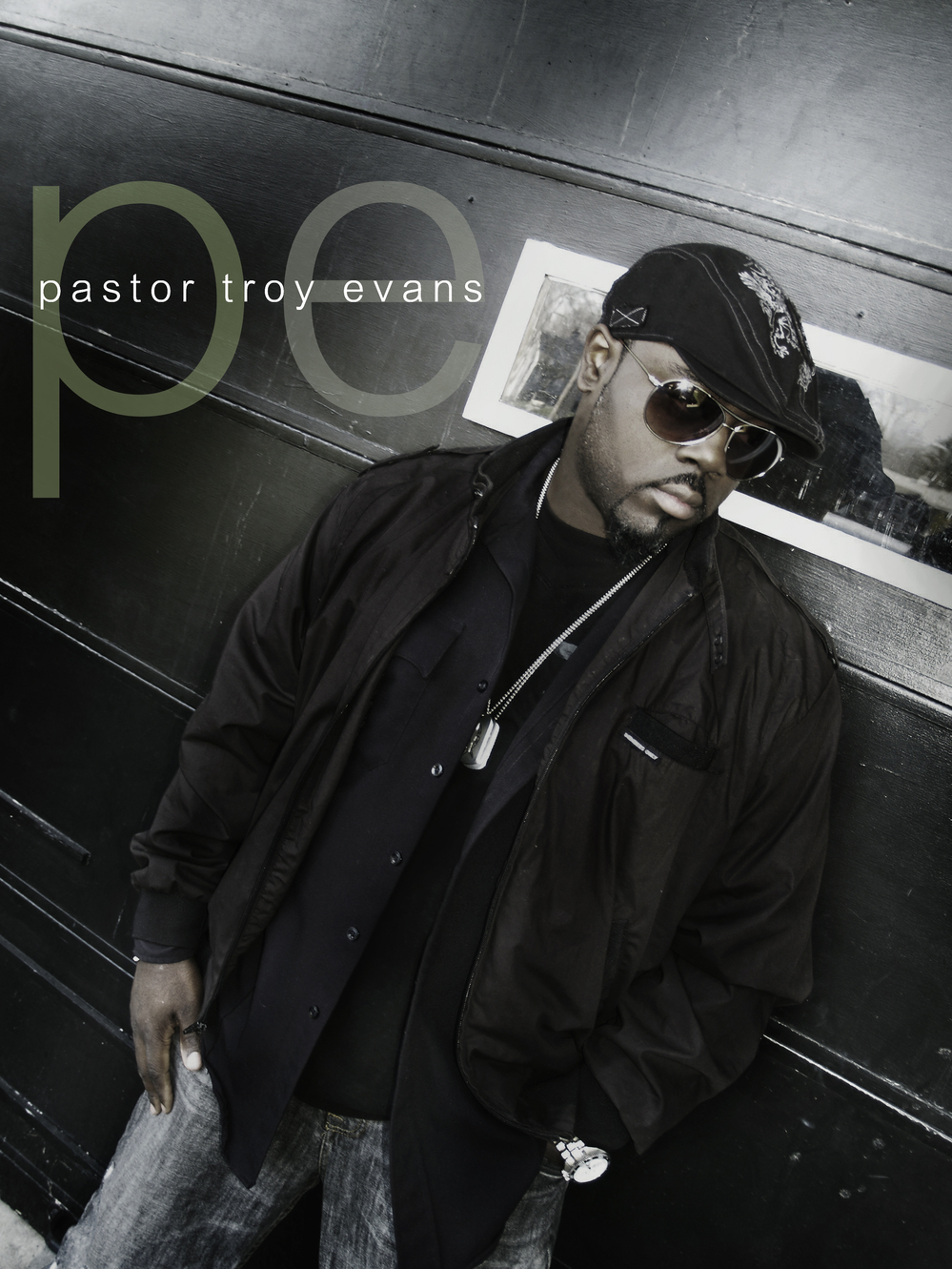
Pastor Troy Evans of Edge Urban Fellowship in Grand Rapids, Mich.

Edge Urban Fellowship Pastor Troy Evans of Edge Urban Fellowship in Grand Rapids, Mich. Pastor Troy Evans of Edge Urban Fellowship in Grand Rapids, Mich.

Edge Urban Fellowship

Troy Evans preaches at Edge Urban Fellowship in a rundown Grand Rapids, Mich., neighborhood known for prostitution. Inside what looks like an abandoned office building are walls covered by graffiti. There are tattooed people wearing baseball caps and jeans. Three 20-year-old men holding mics get ready to bust out some elaborate dance moves.

It may seem like a hip-hop show, but it's actually church.

While Evans preaches to about 100 people on a given Saturday, he has no seminary training and dropped out of school in the 7th grade. His goal is to reach out to kids who either don't have families or are joining gangs. Evans knows exactly what that's like: He was on his own at 16, the leader of one of the dozens of gangs in the area. He says gangs helped him feel that he was part of something bigger than himself.

"What I saw was a group of people that actually cared about each other at a level," Evans says. "What I saw was when there wasn't men in the community or men outside of the community or the church that cared at all about what we were doing, there was a man who took us under his wing. He just so happened to be the leader of the organization."

Hip-hop churches started emerging in the late '90s.

Emmett Price, a professor of music and African-American studies at Northeastern University in Boston, says the churches are on the rise in the U.S. and that they appeal to the latchkey generation.

"Hip-hop culture comes out of the moans and the cries of young people who felt ostracized and disenfranchised from society," Price says.

Now that Evans, who was part of that generation, has left the gang life behind, he's reaching out to those who might be getting involved.

"Our idea of church, holistically, we become surrogate parents," he says.

And one of his surrogate kids is Steven Malcolm, who's onstage performing a song he spent hours writing and producing. Malcolm says Evans plays an effective role sharing his story and spending time with the residents here.

"The one thing all of me and the five other cats [I hang out with] ... have in common is that none of us have our dads," he says. "They're either locked up [or] dead, and Troy has truly stepped in and is a father in our lives."

Evans says that leading church congregants isn't that much different from leading gang members.

"How you move a person from here to there is the same, to indoctrinate somebody is the same, to teach theology is the same," he says.

Evans says church and gangs can also both provide a feeling of safety, community and family. His goal, though, is to get more residents here to turn to church for those things, not the streets.


View the original article here

'Torn': Living As An Openly Gay Christian

Torn

Rescuing The Gospel From The Gays-Vs.-Christians Debate

by Justin Lee

Hardcover, 259 pages | purchase

close TornRescuing The Gospel From The Gays-Vs.-Christians DebateJustin Lee

Justin Lee was raised in a conservative Southern Baptist home. He had two loving parents, and was deeply committed to his faith. In school, classmates even referred to him as "God Boy" because of his devotion.

But, as he was entering high school, Lee's whole world began to change, as he came face-to-face with feelings that he'd tried for many years to suppress.

"I didn't know I was gay at first, because I was the kid who was preaching against folks accepting themselves as gay," he tells Guy Raz, host of weekends on All Things Considered.

Lee formed the Gay Christian Network in 2001 to try and help other gay Christian kids and their families talk to one another, as well as with their respective churches. His new book is called Torn: Rescuing the Gospel from the Gays Vs. Christians Debate.

On coming out

"I absolutely believed it was a sinful choice to be gay. But I knew that I was attracted to guys and I kept thinking that was a phase I would grow out of. And as the years went by and I wasn't growing out of this phase, I got to the point that I was just crying myself to sleep, night after night, begging God, 'Please don't let me feel this anymore.' When I turned to the Christians I most respected in my life — my parents and my friends and my pastors — I found that they didn't have a lot of answers for me, other than just don't be gay. And I thought, well, I could not act on my feelings. I could not talk about my feelings. But I can't make myself straight. So that really sent me on this journey trying to figure out how do we address this as a church."

On being 'too gay' or 'too Christian'

"I talk to people still every day who are just living in that constant feeling of being alone, and it's very depressing when you feel like nobody understands you. You feel like you've been caught up in the midst of this culture war between the gay folks on one side and the Christians on the other side. And here you are, a gay Christian, and there's no place for you."

Justin Lee is the founder and executive director of the Gay Christian Network.

Amy Lee/Jericho Books Justin Lee is the founder and executive director of the Gay Christian Network. Justin Lee is the founder and executive director of the Gay Christian Network.

Amy Lee/Jericho Books

On reconciling with family who disagree with your choices

"I hear from so many folks who are just desperate for a way to sit down and be a family with their family members who don't agree with them on this, or hold their church together ... and I tell folks it's all about continuing to express your love for each other and continuing to share stories."

On his relationship with his parents since coming out

"I love my parents dearly and we have a wonderful relationship. And through the whole process they have been nothing but loving. We've disagreed; sometimes quite strongly. We've had a number of arguments over the years, and ultimately my position has changed on some things, and their positions have changed on some things. What I can say above all else is that I know that they love me and that they're proud of me, and even when we disagree we do that in a way that's loving and respectful of one another."


View the original article here

Dean Puts Religious Power Behind Gun Debate

Host Guy Raz talks to The Very Rev. Gary Hall, dean of the National Cathedral, who is calling for stricter gun control in the wake of the mass shooting in Connecticut. In his sermon Sunday, Hall said the National Cathedral would become a focal point for taking on the gun lobby.

Copyright © 2012 National Public Radio. For personal, noncommercial use only. See Terms of Use. For other uses, prior permission required.

(SOUNDBITE OF MUSIC)

GUY RAZ, HOST:

Some of the sounds from Washington's National Cathedral earlier today. In his sermon, the dean of the cathedral, Reverend Gary Hall, asked a simple question.

REVEREND GARY HALL: Why do we, as a society, tolerate these massacres in increasing numbers? These mass shootings are happening with increasing frequency, and they more and more seem to be targeted directly against children.

RAZ: Reverend Hall is with me now. And, Reverend, thank you for joining us.

HALL: Happy to be here.

RAZ: At times like these, there are many who look to people like you for answers. What can you say?

HALL: In a tragedy, there really isn't much to say, aside from just being with the people who are suffering. The problem of evil and the problem of why God allows suffering is probably the major religious problem for all religious traditions. And no tradition really finally gives a satisfactory answer. Almost every tradition just holds it up, finally, as a mystery.

So in the face of that, it seems to me that people of faith are called not so much as to try to explain why something happened as to simply stand with and put our arms around and care for people as they go through tragedy.

RAZ: In your sermon this morning, you said: The best way to mourn the victims in Newtown is to mobilize the faith community for gun control. There is no doubt, Reverend, that there are those who will say you are politicizing a national tragedy. And what would your response be?

HALL: Well, first of all, whenever the church speaks prophetically, it's accused of engaging in politics. And it's important to remember that most of the Bible is concerned not with personal morality but with social and public morality. In fact, the teaching of Jesus, the teaching of the Hebrew prophets, the teaching of Muhammad in the Koran, those teachings are essentially social teachings.

And so in response to a national tragedy, the church's response needs to be a public response. And the way our society has decided that it engages and does its public business is through our political structures. So, yes, in some sense, you might say I am politicizing a response to a tragedy, but I for one can't listen to another conversation where someone says: Let's talk about gun control, and people say: Well, it's too soon to talk about gun control. Let's grieve.

And then there's a few days of grieving, and then the narrative gets changed. My intuitive sense and the sense of my bishop, Mariann Budde, and with the other faith leaders I've talked about is it's just really time for the faith community to be a countervailing force and to stand against this kind of violence.

RAZ: That's the Reverend Gary Hall. He's the dean of the National Cathedral here in Washington, D.C. Reverend Hall, thank you.

HALL: Thank you very much.

(SOUNDBITE OF MUSIC)

RAZ: And you're listening to ALL THINGS CONSIDERED from NPR News.

Copyright © 2012 National Public Radio. All rights reserved. No quotes from the materials contained herein may be used in any media without attribution to National Public Radio. This transcript is provided for personal, noncommercial use only, pursuant to our Terms of Use. Any other use requires NPR's prior permission. Visit our permissions page for further information.

NPR transcripts are created on a rush deadline by a contractor for NPR, and accuracy and availability may vary. This text may not be in its final form and may be updated or revised in the future. Please be aware that the authoritative record of NPR's programming is the audio.


View the original article here

Gay Orthodox Jews Prepare For Hanukkah

Jewish families will gather this Saturday night to celebrate the beginning of Hanukkah. Host Michel Martin takes a look at some of the not-so-typical families who are changing the face of Judaism. She speaks with Rabbi Steven Greenberg, one of the pioneers of a growing movement of openly gay Orthodox Jews.

Copyright © 2012 National Public Radio. For personal, noncommercial use only. See Terms of Use. For other uses, prior permission required.

MICHEL MARTIN, HOST:

I'm Michel Martin and this is TELL ME MORE from NPR News. Coming up, we'll dig into our mailbag to hear from you about some of our recent stories. That's BackTalk and it's just ahead.

But first, it's time for Faith Matters. That's the part of the program where we talk about matters of faith and spirituality. Tomorrow night marks the first night of Hanukkah, the annual Jewish Festival of Lights. It celebrates the bravery of the Jewish people, the miracle of purified oil, which kept the menorah lit for eight days, and the rededication of the Holy Temple in Jerusalem.

And it is a time when families come together to light the menorah and exchange gifts, so we thought this would be a good time to talk about some of the not-so-typical families that are changing the face of Judaism today.

Our next guest is Rabbi Steven Greenberg. He is an Orthodox Rabbi, a father, a husband, and one of the pioneers of a growing movement of openly gay Orthodox Jews. He's the co-founder and co-director of Eshel, an organization committed to the full integration of Orthodox LGBT Jews into the community. He's the author of "Wrestling With God and Men: Homosexuality in the Jewish Tradition." And Rabbi Steven Greenberg is with us now.

Welcome. Happy Hanukkah to you.

RABBI STEVEN GREENBERG: Well, thank you so much. Happy Holidays to you.

MARTIN: And I do want to mention that, in recognition of your observance of the Sabbath, that we actually recorded this interview before the Sabbath began. OK?

GREENBERG: Thank you.

MARTIN: So with that being said, I did want to ask about your own personal story. Were you raised in the Orthodox tradition?

GREENBERG: No. I was raised in a conservative Jewish family. That means that we were, I would say, ethnic Jews, attended synagogue once a week maybe. When I was 15, I accidentally got invited to an Orthodox rabbi's lunch at his home and it was an invitation to a totally wild and different world that I found totally compelling and interesting and engaging. At the end of the meal the rabbi challenged me to study with him. He was English, so it was over tea and oranges in my study. Do you agree, young man?

So I was totally smitten by meeting such a mercurial, interesting fellow. I said yes. And slowly but surely I became an observant Orthodox Jew.

MARTIN: When you were ordained, when you decided to follow that path, you were ordained in the Orthodox tradition. Correct?

GREENBERG: Oh, yeah. Yeshiva University. Yeah.

MARTIN: And so did you know at that time that you were attracted to men?

GREENBERG: No. I had no notion that there was even the possibility of being attracted to the same sex. I knew that there was something dangerous about my feelings that I needed to keep quiet. I couldn't have told you what that was. When I was 20 it broke through my repression, you know, and I felt consciously attracted to another fellow at the yeshiva I was studying at in Jerusalem.

MARTIN: When you began to really understand yourself, this also coincided at a time when you were very deeply immersed in your studies. How did you think you were going to reconcile these two very important parts of your life?

GREENBERG: Well, at the time I needed to talk with someone and I wanted someone outside my world. I went to Rav Elyashiv, who was well-known as a very competent and wonderful, soulful counselor, and I told him, Master, I'm attracted to both men and women. What should I do? And he said to me, my dear one, my friend, you have twice the power of love. Use it carefully. It was that statement that encouraged me to believe that I could be a great rabbi with twice the power of love. I believed that I could marry and raise a family and it took me 15 years to finally recognize that it was a pipedream, that I was actually not interested in women in the least in that fashion.

And I think it took me so long, Michel, because the line - I am gay - would have kind of made any future that I'd ever imagined unthinkable and it would have replaced it with a horrible and unthinkable future, so I felt like I'd be standing at the edge of a cliff if I had said those words, and so I avoided saying them for 15 years.

MARTIN: Both Jews and Christians cite passages from the Hebrew scriptures, Leviticus particularly, to argue that homosexuality is forbidden by scripture. Parts of that scripture are read on the holy day of Yom Kippur. You have a very personal reaction to it. Can I ask you how you grapple with this theologically?

GREENBERG: Well, so the first thing I want to say is, is that the verse always means something within a particular community and context, so when people - Christians or Jews - say but it says it clearly in the verse, I always say, well, you know, your pastor, your rabbi has read it that way, but please take responsibility for your reading because the verse can be read in other ways.

So the story that maybe you're referring to on Yom Kippur is this one, is that I'm still in the closet, in a lot of pain, and the verse is read on the holiest day of the year in the afternoon and I used to put my prayer shawl over my head and weep. And then, finally, after 10 years, I decide to rise up and go to the lectern where the verse is read, taking the honor of being there and saying the blessings over the scripture when that happens. And at that moment I felt, for the first time, that being vulnerable to the text requires it to be vulnerable to me and everybody like me and if the rabbis or scholars who read that text have not heard my story, our stories, then they don't know what the verse means. They can't.

MARTIN: How, though, do you address the whole question of what it means to be Orthodox if it doesn't mean fealty to tradition and text?

GREENBERG: Loyalty to a tradition can also mean that you're loyal to its remaining alive and real in the moment, and so it's repeated over and over again in the history of religion that a text that meant one thing in one age means another in another, and that is what keeps the tradition alive.

So I would say that it's a mistake to think that traditions are unchanging. They are evolving and if that verse isn't reconsidered, then what one ends up with is a text that is quite mean-spirited to people who made no choices but simply discovered themselves to be gay or lesbian.

The challenge here is to find a way to read the text in line with what we know goodness and God's will to be.

MARTIN: It's such a rich topic and we're really only scratching the surface. I'm speaking with Rabbi Steven Greenberg. He is believed to be the first openly gay Orthodox rabbi and we're talking with him, obviously, on the eve of Hanukkah.

The question is sometimes asked of Christians who disagree with the instructions of some denominations around homosexuality, their argument is, why don't you just practice differently or practice with other people? So I hope you don't mind my asking you the same question...

GREENBERG: No, not at all.

MARTIN: ...because there are Jewish traditions where you could practice. You could even lead a congregation and your sexual orientation would not be an issue. So do you mind if I ask, why not...

GREENBERG: Why stay?

MARTIN: Why stay? Yeah.

GREENBERG: So I think it's a good question and I don't begrudge anybody for leaving because they feel that they can't sustain it any longer, but there is a courage necessary in order for the deep religious communities to be responsible to human beings, and so I honor those who have the courage to say we're not leaving because we trust this tradition and because we know that it has in it the resources to be responsible to all human beings in ways that right now it is not.

I love the Orthodox community in lots of ways and don't think I - I couldn't leave it any more than I could leave my gayness.

MARTIN: How have things changed? You've been out now for, what, eleven years?

GREENBERG: So the attitudes have changed in the following way. It used to be that homosexuality was deemed a demonic aberration. Then it moved to being merely sinful and then it moved from being sinful to being sick. And all of these have shifted to a more open space. Just yesterday a statement came out from a very central modern Orthodox rabbi that even the notion of illness is no longer acceptable, that homosexuality may simply be a part of the human condition.

And once we are seen as an ordinary expression, if minority, but an ordinary expression of human sexuality, every religion will have to begin to reevaluate its response to gay and lesbian people and find a way to welcome and embrace their own gay and lesbian kids. And if I can accomplish that, I'd be very happy.

MARTIN: Rabbi Steven Greenberg is an Orthodox rabbi ordained in the Orthodox tradition. He is an author and a senior teaching fellow with the National Jewish Center for Learning and Leadership. He's co-founder of Eshel, which is a group dedicated to reintegrating LGBT people within the Orthodox community. And he was kind enough to join us from Cincinnati Public Radio.

Thank you and Happy Hanukkah to you and to your family.

GREENBERG: Thank you so much, Michel.

Copyright © 2012 National Public Radio. All rights reserved. No quotes from the materials contained herein may be used in any media without attribution to National Public Radio. This transcript is provided for personal, noncommercial use only, pursuant to our Terms of Use. Any other use requires NPR's prior permission. Visit our permissions page for further information.

NPR transcripts are created on a rush deadline by a contractor for NPR, and accuracy and availability may vary. This text may not be in its final form and may be updated or revised in the future. Please be aware that the authoritative record of NPR's programming is the audio.


View the original article here

Does Science Refute God?

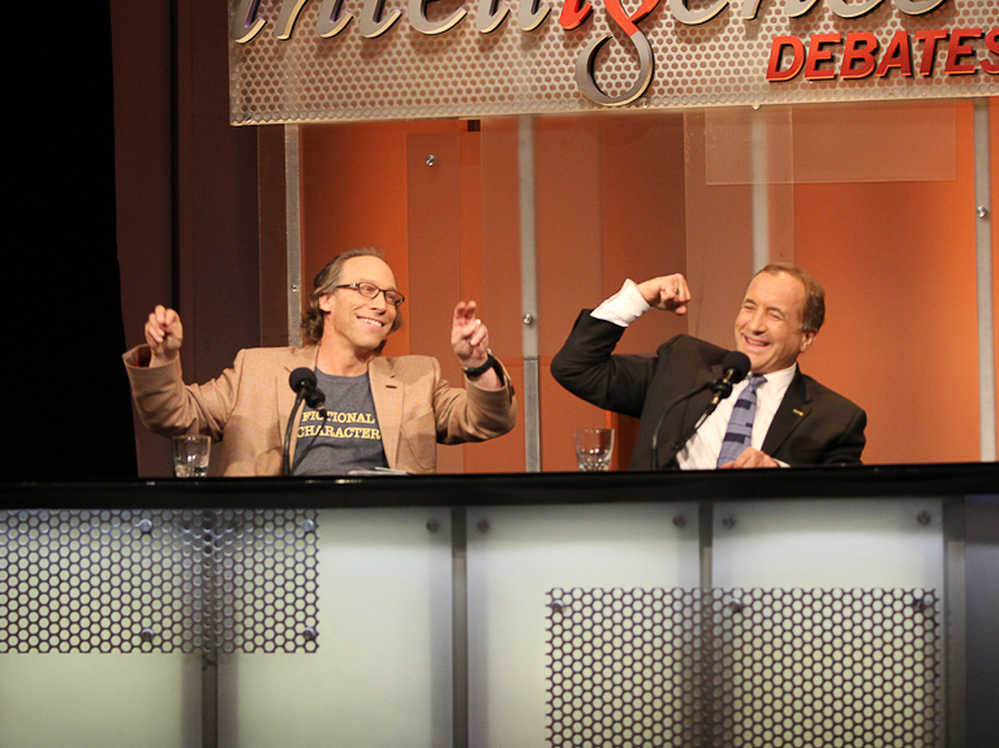
Two teams face off over the motion "Science Refutes God" in an Intelligence Squared U.S. debate.

Samuel LaHoz Two teams face off over the motion "Science Refutes God" in an Intelligence Squared U.S. debate. Two teams face off over the motion "Science Refutes God" in an Intelligence Squared U.S. debate.

Samuel LaHoz

Is belief in God rational? Or has science shown the existence of God to be so unlikely as to make belief irrational?

Two physicists, a skeptic and a scholar tried to answer those questions in the latest Intelligence Squared U.S. debate. They faced off two against two (with one physicist on each side) on the motion "Science Refutes God."

Before the debate, the audience voted 37 percent in favor of the motion and 34 percent against, with 29 percent undecided. After hearing from the two sides, 50 percent said they agreed with the motion "Science Refutes God," while 38 percent did not. That made the side arguing for the motion the winners.

Those debating were:

FOR THE MOTION

Lawrence Krauss, a theoretical physicist, is the director of the Origins Project and a professor of physics at the School of Earth and Space Exploration at Arizona State University. Krauss has written several best-selling books, including A Universe from Nothing: Why There Is Something Rather Than Nothing. Krauss has helped lead a national effort to defend the teaching of evolution in public schools. He currently serves as chairman of the board of the Bulletin of the Atomic Scientists.

Lawrence Krauss and Michael Shermer react to their victory after arguing that "Science Refutes God" in an Intelligence Squared U.S. debate.

Samuel LaHoz Lawrence Krauss and Michael Shermer react to their victory after arguing that "Science Refutes God" in an Intelligence Squared U.S. debate. Lawrence Krauss and Michael Shermer react to their victory after arguing that "Science Refutes God" in an Intelligence Squared U.S. debate.

Samuel LaHoz

Michael Shermer is the founding publisher of Skeptic magazine and editor of Skeptic.com; a monthly columnist for Scientific American; and an adjunct professor at Claremont Graduate University and Chapman University. Shermer's latest book is The Believing Brain: From Ghosts and Gods to Politics and Conspiracies — How We Construct Beliefs and Reinforce Them as Truths (2011). He was a college professor for 20 years. Since his creation of Skeptic magazine, he has appeared on such shows as The Colbert Report, 20/20 and Charlie Rose. Shermer was the co-host and co-producer of the 13-hour Family Channel television series Exploring the Unknown.

AGAINST THE MOTION

Ian Hutchinson is a physicist and professor of nuclear science and engineering at the Massachusetts Institute of Technology. He and his research group are exploring the generation and confinement (using magnetic fields) of plasmas hotter than the sun's center. This research is aimed at producing practical energy for society from controlled nuclear fusion reactions, the power source of the stars. Hutchinson has written 200 research articles about plasma physics, and he has also written and spoken widely on the relationship between science and Christianity. He is the author of Monopolizing Knowledge (2011).

Dinesh D'Souza is the author of What's So Great About Christianity (2008). A former policy analyst in the Reagan White House, D'Souza also served as an Olin fellow at the American Enterprise Institute and a Rishwain scholar at the Hoover Institution at Stanford University. D'Souza is also the former president of The King's College in New York City. He co-directed the film 2016: Obama's America, which argues that President Obama is deliberately weakening the United States.


View the original article here

Clergy Called On To Help With Healing In Newtown

The ministers, priests and rabbis of Newtown, Conn., are taking on some of the toughest roles in the wake of the school shootings. They are presiding over funerals, comforting family members and providing support to members of the community.

Copyright © 2012 National Public Radio. For personal, noncommercial use only. See Terms of Use. For other uses, prior permission required.

MELISSA BLOCK, HOST:

This is ALL THINGS CONSIDERED from NPR News. I'm Melissa Block.

ROBERT SIEGEL, HOST:

And I'm Robert Siegel. In Newtown, Connecticut, religious leaders gathered this afternoon to share strategy on how best to help their hurting community. As NPR's Tovia Smith reports, the town's clergy are being tested in unprecedented ways, following Friday's devastating attack on Sandy Hook Elementary School.

TOVIA SMITH, BYLINE: Reverend Matt Crebbin of the Newtown Congregational Church says he's dealt with plenty of profound tragedy - sickness, suicide, even murder, but nothing anywhere close to what he and other pastors are facing now.

REVEREND MATTHEW CREBBIN: Wow. You know, I'm not even sure I could name, you know, they all seem so small.

SMITH: The enormity and intensity of this tragedy has left clergy scrambling for new ways to handle everything from logistics like processing donations and sharing church space for funerals to supporting each other emotionally, not unlike the way they do for those in mourning.

CREBBIN: Sometimes if we look at the big picture, then we may say, wow, this is just too much, you know. I'm a Christian, but I think it's a Buddhist philosophy that says, you know, even the longest journey begins with one step. And I think we have a long journey ahead. Good morning, sir.

UNIDENTIFIED MAN: Hey, how are you?

CREBBIN: Good, good, good.

UNIDENTIFIED MAN: I give everybody hugs so.

CREBBIN: Yeah.

SMITH: With every embrace, Crebbin and other pastors are drawing on every ounce of their training, experience, and gut instinct.

RABBI SHAUL PRAVER: This is tough.

SMITH: Rabbi Shaul Praver says everyone grieves differently and sometimes counseling is simply a matter of trial and error.

PRAVER: You just have to watch the cues and when you find something that is comforting to them, you continue.

SMITH: For example, Rabbi Praver says, one grieving mother who he describes as a very bright and poetic woman, responded to what he calls very high spiritual ideas.

PRAVER: So I just turned to her when she was very, very distraught and I said, you were once six, where is, you know, your six-year-old? And she said, my six-year-old self is within myself. So then you have that leap of faith that when we leave this body, whatever we are, the soul that we are, will inhabit, you know, a larger vessel. And she intuitively feels like that is true. So it helped calm her down.

SMITH: It's easy to worry about saying the wrong thing, but Reverend Crebbin says that's where being a man of faith comes in handy.

CREBBIN: My faith teaches me that this isn't about me. You know, as a Christian, I'm not the savior and so I do what I am able to do and but your try also to trust that we're held by something greater and that God's grace will find ways that even I can't imagine to reach out and care for and sustain people.

SMITH: Further complicating the challenge is trying to minister not only to a congregation, but a whole community.

CREBBIN: That's another whole dimension to this. Suddenly, you know, evil has invaded this community. How are we going to cope with that?

SMITH: Father Mark Moore held a vigil at Saint John's Episcopal Church right next to the Sandy Hook Elementary School. None of his parishioners were killed, but Father Moore says he was offering comfort that was needed by everyone.

FATHER MARK MOORE: If it's war, after a natural disaster, even if it's a crime you can understand sometimes the motivation. But the slaughter of innocents without any kind of motivation is something that is so far beyond any comprehension, it causes us to have to go into the religious realm to begin to understand.

SMITH: As funerals continue in Newtown daily, the words of the clergy are resonating even to the unaffiliated like Nancy Taylor.

NANCY TAYLOR: I feel like, you know, I call him Father Bob, has been put on this earth to be here for the people of this town because he brings us all comfort without being preachy. I have a real sensation of there's an arm around my shoulders and I have no direct loss here, just the loss of the security of my community.

SMITH: In some ways, the pastors here say the hardest task is still ahead after all the funerals and services are done and there are no more rituals or roadmaps to follow forward. Tovia Smith, NPR News, Newtown, Connecticut.

Copyright © 2012 National Public Radio. All rights reserved. No quotes from the materials contained herein may be used in any media without attribution to National Public Radio. This transcript is provided for personal, noncommercial use only, pursuant to our Terms of Use. Any other use requires NPR's prior permission. Visit our permissions page for further information.

NPR transcripts are created on a rush deadline by a contractor for NPR, and accuracy and availability may vary. This text may not be in its final form and may be updated or revised in the future. Please be aware that the authoritative record of NPR's programming is the audio.


View the original article here

In Nigeria, 'A Very Jewish ... Very African' Community

"Being welcomed by and embraced by Igbos, who take Judaism so seriously ... it raises the question of what it means to be a Jew," says William Miles.

A handmade menorah in Abuja. William Miles/Markus Wiener Publishers

Three years ago, Miles, a self-proclaimed semi-practicing Jew, decided to celebrate Hanukkah in Africa's most populous country. He wrote about his experience in a new book called Jews of Nigeria: An Afro-Judaic Odyssey. He tells NPR's Tell Me More host Michel Martin that he found "a very Jewish community, but also a very African community."

The Igbo are an ethnic group in the southeast of the country. Miles explains that a long oral history connects them to one of the 10 lost tribes of Israel. "The tribe of Gad made its way all the way to West Africa, and they have been preserving ancient Israelite Hebrew traditions ever since, and so they claim they are just rediscovering their old roots," he says.

But based on his experience, Miles explains, there is more to the recent embracing of their beliefs.

"Even though they claim that they're going back to their ancient roots, it's only in the last couple of decades that they are actually practicing as Jews in a way that is recognized in global Judaism," he says.

Miles describes the Jewish Igbo as the "world's first Internet Jews." Through online research, they learned more about how Judaism is practiced throughout the world and started to master Hebrew. "It's really tough to learn Hebrew on your own," Miles points out, but "they are masters at it."

Miles says their celebration of Hanukkah would be "very familiar to any American Jew who plops down in Abuja." The main difference is their access to Jewish ritual objects to celebrate with. For example, instead of lighting candles at home, they lit a makeshift menorah at the synagogue. "Picture this: Coke bottles, which they painted ... a wooden box to put them in, and then put whatever candles they have."

A Nigerian boy receives a dreidel for Hanukkah.

A Nigerian boy receives a dreidel for Hanukkah.

William Miles/Markus Wiener Publishers
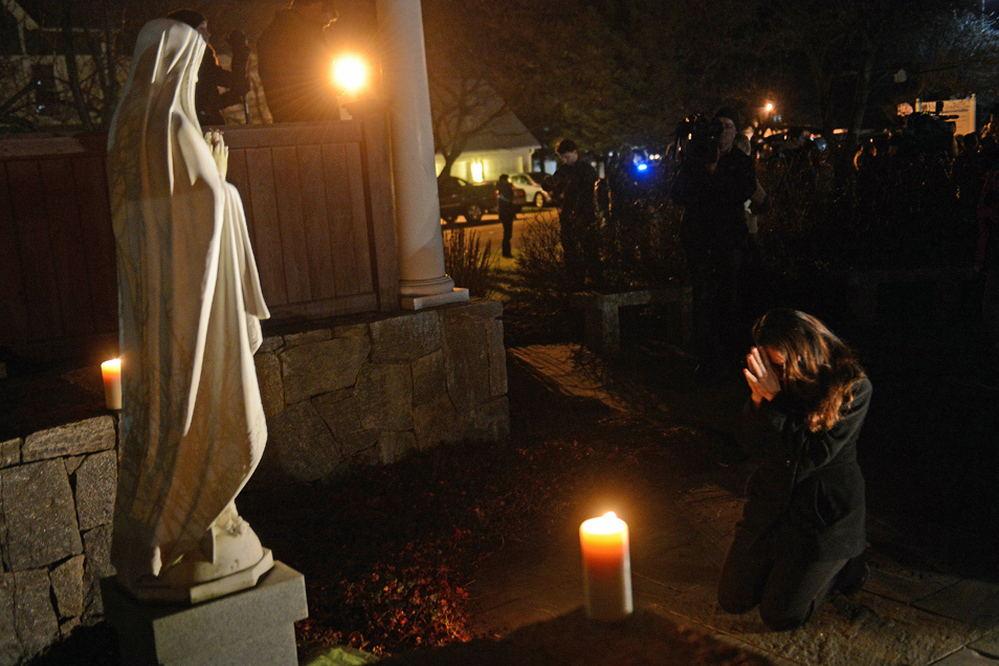
"I have to say, Nigerians take religion very seriously," he says. Miles describes meeting Jewish Igbos who had made some significant sacrifices for their faith. One told him, " 'My wife ... insisted that we should go back to Christianity. Look, I said, I have found the faith of my forefathers, there's just no going back. So we parted, just like that, because of the religion.' "

The Jewish Igbo are not yet recognized by Israel's rabbinate, but Miles says that does not matter to them. "They are happy to be acting, practicing, worshipping as Jews," he says.

It's this commitment that Miles feels should raise questions for him and others in the Diaspora who "don't really feel that it's that important to practice Judaism." He claims that "if any Jew has the privilege to spend time with this Igbo Jewish community ... they would acknowledge that they have a lot to teach Jews around the world what it means to be Jewish."


View the original article here

Newtown Tragedy: Would A Good God Allow Such Evil?

People gather for a prayer vigil at St. Rose Church in Newtown, Conn., on Dec. 14. In the aftermath of such tragedies, many people ask how a benevolent God and suffering can coexist.

Emmanuel Dunand/Getty Images People gather for a prayer vigil at St. Rose Church in Newtown, Conn., on Dec. 14. In the aftermath of such tragedies, many people ask how a benevolent God and suffering can coexist. People gather for a prayer vigil at St. Rose Church in Newtown, Conn., on Dec. 14. In the aftermath of such tragedies, many people ask how a benevolent God and suffering can coexist.

Emmanuel Dunand/Getty Images

When a human tragedy occurs on the scale of the Newtown shootings, clergy are invariably asked an ancient question: If God is all-knowing, all-powerful and benevolent, why does he allow such misfortunes?

There's even a word for reconciling this paradox: theodicy, or attempting to justify God's goodness despite the existence of evil and suffering.

A World Both Beautiful And Shattered

Steven Folberg, senior rabbi at Congregation Beth Israel in Austin, Texas, has been asked this question before. On his front porch on a balmy December day, a reporter asks him again: Please explain the nature of God, in light of the slaughter of innocents in Connecticut.

No small assignment.

"I saw a bumper sticker once that said, 'God is good. Evil is real. And God is all powerful. Pick two,' " Folberg says.

"The idea was to say, if one accepts those three propositions as true, then they're logically inconsistent. And how do you wiggle your way out of that issue?"

You cannot wiggle your way out, the rabbi continues. You have to admit that we live in a world that is, by turns, beautiful and shattered.

Folberg says he draws instruction from his own faith, which says, "I have a responsibility as a human being — and in my case, as a Jew — to look at what's broken in the world, to mend it and then, using old Jewish language, to be a partner with God in completing the work of creation which is incomplete."

Finding Peace In Eternal Life

The Rev. James Martin, a Jesuit priest and contributing editor at the Jesuit magazine America, says that for Christians, suffering, violence and death are never the last word.

"We believe in eternal life," Martin says. "It does give people hope for those who are killed, for those who die, that they will be in God's eternal rest.

"And it also gives us the hope that we will meet them again," Martin adds. "So suffering and death are not the only part of the story — and the resurrection shows us this."

Moreover, Martin says, God is not a theological abstraction; he is present in our suffering. He understands pain.

"Remember that God's own son died a violent death," Martin says. Jesus died horribly ... but there is no easy answer — there is no adequate answer — to this question which theologians call the Mystery of Evil."

Part of the paradox of theodicy is rooted in our very nature, says Imam Jihad Turk, religious adviser at the Islamic Center of Southern California and president of Bayan Claremont Islamic graduate school. Islam shares this belief with the other Abrahamic faiths, Turk says.

"Theologically, we would look at it from the point of view that part of what makes us unique as a creation of God is that we have free will," Turk says. "And for free will to be meaningful, we have the choice between good and evil. And if we only had the choice to do good then it wouldn't be a meaningful free will."

Keeping Evil At Bay

In August, an alleged white supremacist walked into a Sikh temple in Oak Creek, Wis., and randomly murdered six people. It's believed the assailant mistook Sikhs for Muslims.

The wife of Balhair Dulai, director of the board of trustees at the temple, was one of three people wounded in the attack. Dulai believes the killers who did mayhem in his temple and in Sandy Hook school had something in common: They dwelled in darkness.

"Evil comes when there is no God," Dulai says. "And when there is not God's love, the conscience allows evil to creep in. When evil creeps in, then these things tend to happen."

So why does a good God allow evil? These four faith leaders agree on this: Beware of anyone who says he or she has the answer.


View the original article here